


Euphorbia milii, Crown-of-thorns, 鐵海棠, Christusdorn, Corona de cristo, Kristi tornekrone, Euphorbe de Milius, Αγκάθι του Χριστού, Spina di Cristo, ハナキリン, യൂഫോർബിയ, Coroa-de-Cristo, Молочай Миля, Kristi törnekrona, فربيون شوكة المسيح
Crown of Thorns: Beautiful Succulent with a Storied Past
The Crown of Thorns, also known as Christ Plant or Christ’s Thorn, isn’t just captivating – it’s a low-maintenance flowering succulent shrub native to Madagascar. This popular houseplant brings a touch of vibrancy to any space with its stunning blooms.
A Rainbow of Colors:
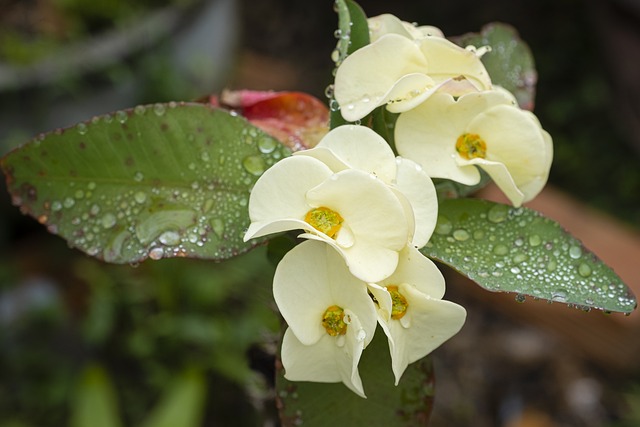
Unlike its namesake, the Crown of Thorns offers a cheerful spectrum of colors. The flowers themselves are small, but they’re surrounded by showy modified leaves that come in a range of hues like red, peach, white, yellow, orange, and even purple. This variety adds to the plant’s appeal, making it a versatile choice for any décor.
Key Features:
- Origin: Madagascar
- Family: Spurge (Euphorbiaceae)
- Habit: Flowering succulent shrub
- Size: 4 inches to 20 feet tall (depending on species)
- Flowers: Long-lasting bracts (often mistaken for petals) in a variety of colors
Interesting Facts:
- The Crown of Thorns boasts a long history of cultivation, introduced to France in 1821.
- Numerous flower color variations exist, adding to its visual appeal.
- The plant’s name honors Baron Milius, who brought it to Europe.
- Legend associates the Crown of Thorns with the crown worn by Jesus during the crucifixion, although botanists believe this to be unlikely.
Care and Propagation:
The Crown of Thorns thrives in a sunny location with well-draining soil. Water moderately, avoiding overwatering. This frost-sensitive plant needs protection from freezing temperatures. Fortunately, propagation is simple – cuttings can be used to create new plants.
Traditionnal use:
The use of latex is reported as a traditional remedy for warts in some countries, specifically for wart treatment rather than for general skin health.
- In TCM, while information about the use of sap, stems, and roots is limited, their traditional applications are not commonly cited due to a lack of evident results.
- Flowers: The flowers of the plant are used separately for different purposes:
- They are believed to cool the blood.
- They are used to stanch bleeding, meaning they can help stop bleeding.
Sources rarely mention the use of Euphorbia milii in traditional medicine, unlike other species such as Euphorbia peplus, Euphorbia tirucalli, Euphorbia fischeriana, Euphorbia helioscopia, Euphorbia officinarum, Euphorbia obtusifolia, etc. While the latex of Euphorbia milii is reported to be highly toxic, causing severe skin and eye irritation, that of certain other species of euphorbia has been used topically to treat skin conditions like warts, eczema, and psoriasis.
- The sap of Euphorbia peplus shows promising efficacy in treating basal cell carcinomas and squamous cell carcinomas, as evidenced by high response rates in clinical studies.
Euphorbia milii: Chemical Treasure Trove
The Crown of Thorns isn’t just visually stunning; it also harbors a wealth of bioactive compounds. Research has uncovered a variety of chemical constituents within its flowers, including alkaloids, carbohydrates, flavonoids, saponins, and tannins.
- Triterpenoids: β-sitosterol, cycloartenol, β-amyrin acetate, lupeol, and euphol (known for their potential antifungal, pain-relieving, and molluscicide properties).
- Flavonoids: Including quercetin (specific amounts still under investigation).
- Phenolic compounds: Gallic acid and others (total phenolic content being measured in studies).
Novel Discoveries and Promising Effects
- Discovery of New Substances: Recent research has revealed the presence of previously unknown compounds in Euphorbia milii, categorized as barbital and benzodioxole derivatives. These newfound substances hold exciting possibilities for future medical advancements.
- Effect on Cancer Cell Growth: Extracts from Euphorbia milii containing these new compounds display significant potential in halting the aggressive spread of cancer cells.
- Mechanism of Action: This effect is attributed to the substance’s ability to inhibit specific proteins within cancer cells. These proteins, like CDK2 and TS, play a crucial role in cell growth. By inhibiting them, the Euphorbia milii extract effectively prevents cancer cells from multiplying uncontrollably.
Euphorbia milii: Exploring Its Health Benefits
1-The Antioxidant Edge
Euphorbia milii’s chemical profile extends beyond its potential impact on cancer. Studies have identified the presence of various antioxidant compounds within its flowers, including phenols, cardiac glycosides, coumarins, and quinones. These antioxidants play a vital role in the body’s defense system by:
- Combating Free Radicals: Free radicals are unstable molecules that can damage cells and contribute to various health problems. Antioxidants neutralize these free radicals, protecting the body from their harmful effects.
- Reducing Disease Risk: The antioxidant properties of Euphorbia milii may help reduce the risk of chronic diseases associated with oxidative stress, such as heart disease, cancer, and neurodegenerative disorders.
2- Scientific Evidence for Antimicrobial Activity:
- Extracts from the flowers, particularly those made with hexane, acetone, and methanol, exhibit broad-spectrum activity against various bacteria. This suggests that Euphorbia milii could potentially combat a wide range of bacterial infections, targeting both Gram-positive (Bacillus subtilis, Staphylococcus aureus) and Gram-negative (Escherichia coli, Proteus vulgaris) organisms.
Mechanism of Action:
- Phenolic compounds, found in higher concentrations in effective extracts, are believed to be the key players:
- Disrupting Bacterial Membranes: These compounds damage the bacteria’s cell membranes, hindering their function and survival.
- Inhibiting Bacterial Enzymes: They may also interfere with essential enzymes crucial for bacterial growth and reproduction.
3- Crown of Thorns Flower Extract: Hope for Cancer Prevention?
A study explored the potential of Euphorbia milii flower extract (EAEEMF) against breast and colon cancers in mice. EAEEMF treatment not only shrank tumors but also improved overall health. This extract boosted the body’s antioxidant defenses and normalized blood parameters, suggesting its promise as a natural agent for cancer prevention.
4- Euphorbia milii Extract May Thwart Tumor Growth
Extracts from the Euphorbia milii plant, traditionally used against cancer, showed promise in blocking new blood vessel formation (angiogenesis) critical for tumor growth. Researchers identified specific compounds and found the ethyl acetate fraction particularly effective. This link between Euphorbia milii’s traditional use and its antiangiogenic properties warrants further exploration.
5- Euphorbia milii and the Immune System
While Euphorbia milii’s latex shows promise as a natural molluscicide, its effects on the human immune system paint a more complex picture. Scientists are studying the safety of this plant in schistosomiasis control programs, and recent research delves into its impact on human lymphocyte proliferation (cell division).
Here’s what we know so far:
- Enhanced Cell Proliferation: Studies reveal that Euphorbia milii latex, when incubated with human blood cells, significantly increases cell division stimulated by lectins and antibodies.
- Possible Explanations: This effect might be due to the presence of phorbol esters (compounds similar to TPA) or mitogenic lectins (plant proteins that stimulate cell division) within the latex.
6. New Horizons: Euphorbia milii and Nanotechnology
Euphorbia milii’s potential extends beyond its biochemical profile. Recent research explores the exciting realm of nanotechnology. Scientists have successfully harnessed the plant to create gold nanoparticles derived from its methanolic extract. These nanoparticles exhibit remarkable properties, including:
- Enhanced Therapeutic Potential: They show promise for pain relief, muscle relaxation, and potentially calming effects.
- Improved Stability: Unlike some nanoparticles, they demonstrate remarkable stability across different environments, making them versatile for drug development.
- Heavy Metal Detection: These nanoparticles can even detect harmful heavy metals, potentially enhancing the safety of herbal medicine and food.
7. Relief for Gout Sufferers
A study revealed that the methanolic extract from Euphorbia milii leaves possesses properties that could be beneficial in gout treatment:
- Reduced Uric Acid Production: The extract significantly reduced uric acid production, a key factor in gout attacks.
- Xanthine Oxidase Inhibition: It also exhibited higher levels of xanthine oxidase inhibition compared to other extracts studied. Xanthine oxidase is an enzyme that contributes to uric acid production.
- High Phenolic Content: Phenolic compounds are known for their potential antioxidant and anti-inflammatory properties, which could be helpful in managing gout.
This promising finding comes from a study titled “Malaysian Medicinal Plants (Euphorbia milii) as a Drug Alternative Source for Anti-gout Therapy,” published in the Malaysian Journal of Analytical Sciences (MJAS), Volume 27, Issue 1 (2023)
Crown of Thorns: A Natural Approach to Pest Control
The beautiful Euphorbia milii offers surprising benefits beyond its aesthetics. This plant holds promise as a natural solution for various pest control challenges.
1. Targeting Snails with Precision:
Interestingly, Euphorbia milii’s latex shows promise as a natural molluscicide. It effectively targets snails that transmit schistosomiasis (Biomphalaria glabrata and Biomphalaria tenagophila) at low concentrations, while harming minimal other aquatic life. This selectivity suggests Euphorbia milii could be a more targeted approach compared to broad-spectrum chemicals for snail control. However, further research is needed.
2. Fighting Peste des petits ruminants (PPR):
Euphorbia milii’s potential extends beyond traditional pest control. Studies show that extracts from its leaves exhibit significant antiviral activity against Peste des petits ruminants virus (PPR). The promising antiviral properties of Euphorbia milii suggest the possibility of developing novel treatments or preventative measures for PPR, potentially benefiting animal health and the livelihoods of farmers.
3. A Natural Weapon Against Insects:
Research also reveals the insecticidal properties of Euphorbia milii’s leaf oil. This oil is effective against various insect pests, including cockroaches, leafhoppers, and mosquitoes. The oil’s bioactive metabolites highlight its potential as a natural and targeted insecticide.
Beware the Beauty: Potential Dangers of the Crown-of-Thorns Plant
The “Crown-of-Thorns” plant (Euphorbia milii) is known for its vibrant flower clusters and red bracts that mimic petals. However, beneath its beautiful exterior lies a hidden danger – a milky sap containing moderately toxic compounds.
The main culprit is a substance called 5-deoxyingenol. This can cause irritation if it touches your skin or eyes, and even worse symptoms if ingested. These include stomach pain, burning and blistering in the mouth and throat, and vomiting. While the toxicity is mild for most adults, it can still be quite unpleasant and potentially lead to temporary blindness.
Danger to Pets and Children:
The Crown-of-Thorns poses a particular threat to pets and young children. The plant’s attractive flowers can be tempting, and curious animals or children might ingest parts of it. Additionally, the sap’s caustic and irritant chemicals can worsen the harmful effects.
Here’s How to Stay Safe:
- Avoid Contact: It’s crucial to avoid contact with the plant’s sap altogether. Wear gloves when handling it and keep it out of reach of children and pets.
- Be Aware of Symptoms: If you suspect someone has ingested the plant, watch for signs like abdominal pain, mouth and throat blistering, and vomiting. Seek medical attention immediately if these occur.
.