

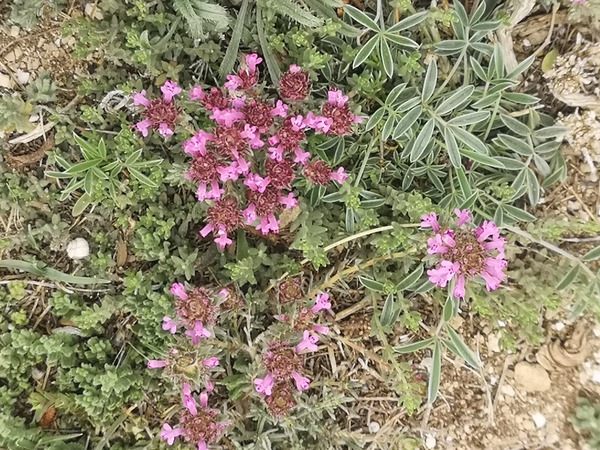
Moroccan thyme
General Morphology: Thymus plants are characterized by their small, aromatic, perennial herbaceous nature. They thrive in well-drained calcareous soil under full sun. The plants typically appear as perennial aromatic subshrubs or shrubs with erect to prostrate quadrangular stems. They feature clusters of flowers in various colors like white, cream, pink, or violet. Leaf morphology varies, ranging from flat with revolute margins to almost acicular, with variable indumentum and occasional ciliation at the margins.
Glandular Trichomes: Thymus leaves possess two types of glandular trichomes, containing volatile oils. These include pedicellate glands with essential oil-filled upper cells and big globose glands with basal cells.
Moroccan Thyme Species
Morocco boasts a diverse array of Thymus species, with both endemic and non-endemic varieties. These species exhibit unique geographical distributions and botanical classifications, contributing to the country’s rich botanical heritage. Among the notable Thymus species found in Morocco are:
| Thymus atlanticus | Thymus maroccanus |
| Thymus riatarum | Thymus lythroides |
| Thymus leptobotrys | Thymus zygis |
| Thymus pallidus | Thymus hyemalis |
| Thymus bleicherianus | Thymus munbyanus |
| Thymus willdenowii | Thymus satureioides |
Medicinal Properties in Ancient Texts
In Arabo-Muslim medicine, scholars like Avicenna and Ibn Al-Baytar extensively documented thyme’s medicinal properties. These included relieving toothache, enhancing eyesight, benefiting various organs, and treating ailments like coughing, nausea, and tumors.
Vernacular Names and Linguistic Origins
Thyme is known by various names across Arab regions, with “Zaâtar” being the most common. The historical term “Hasha” 1 is also mentioned, tracing its roots to ancient languages like Ugaritic and Akkadian. In Ugaritic, wild thyme2 was described as “Hasū,” pronounced “Hashu.” Interestingly, H. P. J. Renaud and G. S. Colin’s Glossary of Moroccan Medical Terms (1934) documented “Sa’tar” as being used interchangeably with “Hasha” 3.
The exploration of thyme’s etymology extends beyond Ugaritic. Akkadian, another ancient East Semitic language spoken in Mesopotamia (present-day central Iraq) during the 3rd millennium BC, also offers a piece of the puzzle. Evidence suggests that the Akkadian word for thyme or orgeano was “Zataru” (with variant spellings including Zateru, Sataru, and Sateru)4. Notably, the “Marduk Garden,” a sanctuary dedicated to cultivating medicinal plants, included thyme among its flora, highlighting its historical significance throughout the region.
Enduring Knowledge through the Centuries
From the 13th to the 16th century, scholars across the Arab world continued to emphasize thyme’s significance. Daoud al-Antaki regarded it as a tonic and stimulant, while Al-Ghassani (1548–1610) provided a modern classification, distinguishing thyme from oregano by introducing the name “soâitra” (صعيترة)5.
Insights from Historical Texts and Scholars
Al-Ghassani’s work, “Garden of Flowers in the Explanation of the Character of Herbs and Drugs,” offers a deeper understanding of thyme’s role in Arab herbalism. Moroccan nomenclature, such as referring to thyme as “صعيترة” (sa’itra) or “زعيترة” (za’itra), reflects a clear distinction from oregano. This differentiation is also evident in the Berber language (Amazigh), with various names for thyme, indicating a well-established tradition of recognizing and utilizing thyme distinctively.
Berber vernacular names appear to offer more precision in describing thyme and oregano species than Arabic names. In 1920, Jean Gattefossé, a French botanist and journalist, wrote a book called “Voyage au Maroc,”6 where he extensively discussed the aromatic resources of Morocco. He noted that the Berbers had a better understanding of distinguishing plant species and had a less confused vocabulary when compared to that of the Arabs.
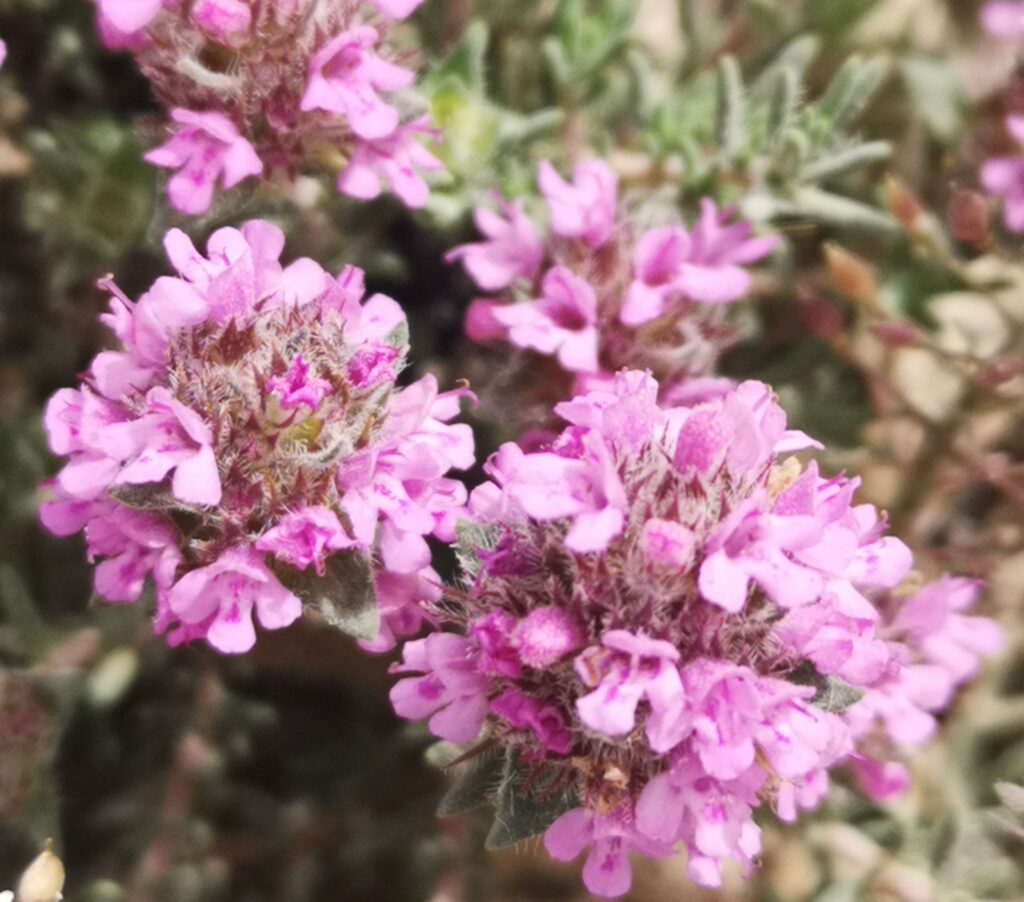
Moroccan Arabic and Berber Names
Moroccan Arabic names of thyme: Zâitra, Zaâtar, Zâaytra, Zaâter Essouiri.
Berber names for thyme: Tazoukenit, Azoukni, Izoukni, Zouchencheni, Taouchent, Zouchen, Zouken, Zoukeni, Ozoukenni, Aserkna, Azekount, Aduchen.
Moroccan Arabic names of oregano: Zaâtar, Saâtar, Sahtar, Zaâtar Tadlaoui, Zaâtar Rifi, Zaâter Targuiste.
Berber names for oregano: Zwi, Azoui, Azwi, Azouy, O’azouy, Zouy.
While there might be some variations in the names due to the diverse Berber tribal languages, there is generally no significant confusion7.
Deciphering Zaâtar: Thyme and Oregano’s Shared Name
The herbs thyme and oregano, while flavor companions, can present a challenge in Morocco and the Levant when it comes to terminology. This summary dissects the intricacies of “Zaâtar” and related terms to bring clarity.
Morocco: Distinct Names for Distinct Herbs
In Morocco, a clear distinction exists between thyme and oregano. Here, “Zaâitra” or “Sâitra” specifically refers to thyme, while “Zaâtar” is typically used for oregano. This distinction is often based on the physical characteristic of the leaves. However, some ambiguity persists as some Moroccans might use “Zaâtar” for both herbs.
Dual Meanings of ‘Za’atar’ in Levantine Countries
- Spice Blend: Most commonly, za’atar refers to a spice blend used in Levantine cuisine. This blend typically includes:
- Dried herbs: Oregano, wild thyme, or a combination of these.
- Sumac: A ground berry with a tangy, citrusy flavor.
- Sesame seeds: Toasted sesame seeds add a nutty texture and a slightly bitter note.
- Salt: Sometimes salt is included in the blend.
The exact proportions of these ingredients can vary depending on the region and the brand.
- Single Herb: In some contexts, particularly in herbal medicine, za’atar refers to a single herb rather than a blend. This herb can be:
- Oregano: Whit robust, earthy flavor profile with subtle hints of bitterness.
- Thyme: Known for its antiseptic properties and pungent flavor.
- Marjoram: A close relative of oregano with a milder, slightly sweet flavor.
In essence, understanding the use of “Zaâtar” requires considering both the geographical location and the context (culinary vs. medicinal) in which it’s used.
Morocco’s Thyme Tea Tradition
In Morocco, thyme (zaâitra) is primarily used in cooking and herbal remedies. However, southern Morocco boasts a unique regional tradition: thyme tea. It’s important to remember that Moroccan “tea” typically refers to a hot beverage brewed with loose-leaf green tea, similar to the well-known mint tea.
The “thyme tea” in this context offers a twist. Here, a distinctive blend is created by infusing both loose-leaf green tea and a local wild thyme species. This combination results in a fragrant and flavorful beverage, often enjoyed after a hearty lunch as part of the southern Moroccan tradition. While thyme might be used elsewhere in Morocco, it’s the frequent enjoyment of this specific thyme tea blend that makes it a cultural staple in the south.
Smen: A Unique Thyme-Infused Fermented Butter in Moroccan Cuisine
Smen, a cornerstone ingredient in Moroccan cooking, is not your typical salted butter. Crafted from aged, clarified raw milk butter infused with salt and either oregano or thyme, depending on the locality and prevalent herbs, it undergoes a lengthy fermentation process, unlike its Levantine or Egyptian counterparts that resemble ghee. Stored in cool, dark spaces for months or even years, Smen develops a distinctive pungency, resulting in a strong and complex flavor profile with hints of cheese and earth.
This unique fermented butter acts as a versatile flavor enhancer within Moroccan cuisine. Smen’s salty and savory notes elevate dishes like couscous, the hearty Hrrira soup, and the iconic clay pot stews known as Tajines. For those seeking more robust flavors, Smen can even be substituted for regular butter when pan-frying eggs, especially during colder mornings.
The historical significance of Smen is evident in the Fundok (caravanserai) Qaât Smen within the ancient Fez medina. This centuries-old establishment continues to thrive, offering not just prized Smen but also a bounty of other Moroccan staples like honey, olive oil, and the delectable Fassi Khlii – a salted meat preserved with olive oil or fat.
References
- Watson, W. G. E. (2004). A Botanical Snapshot of Ugarit. Trees, Fruit, Plants and Herbs in the Cuneiform Texts. Aula Orientalis, 22, 107-155. ↩︎
- Panayotov, S. V., & Vacín, L. (Eds.). (2018). Mesopotamian Medicine and Magic: Studies in Honor of Markham (p. 584). Brill. ↩︎
- Renaud, H. P., & Colin, G. S. (1934). Glossaire de la matière médicale marocaine. Geuthner. ↩︎
- Black, Jeremy; George, Andrew; Postgate, Nicholas (eds.). (2000). A Concise Dictionary of Akkadian. Oxford University Press ↩︎
- Al-Ghassani (The Vizir). (1985). Garden of Flowers in the Explanation of the Character of Herbs and Drugs. Beyrouth: Dar al Gharb al Islami. ↩︎
- Gattefossé, J. (1921). Voyage botanique au Maroc. In Battandier,J. A., & Jahandiez, E. (1920). Publications de la Société Linnéenne de Lyon, 41-2, 36-70 ↩︎
- Khalil, N. (2023). Medicinal and Edible Plants of Morocco (p. 43). Self-published. ↩︎