


Overview and Historical Use of Oleander
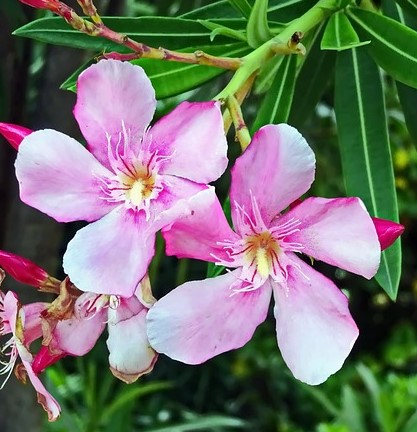
Oleander, scientifically known as Nerium oleander, is a member of the dogbane family, Apocynaceae, commonly referred to as rosebay. Thriving in temperate and subtropical regions, this hardy plant showcases clusters of fragrant flowers in shades of white, pink, red, and yellow, set against a backdrop of dark green, lance-shaped leaves. Oleander’s robust nature and ability to thrive in various soil types make it a popular ornamental choice for gardens. Evidence suggests its use in traditional medicine across various cultures, highlighting its potential medicinal properties throughout history.
Early Civilizations:
- The use of oleander in Arabian cultures for treating skin ailments hints at a long history of understanding its potential medicinal properties. While the exact medicinal applications in ancient times remain unclear, this practice suggests further exploration into its historical uses and benefits.
- Historical texts like Limet Henry’s “Pharmacopée et parfumerie sumériennes” document the use of flowers such as oleander in Mesopotamian perfumery. This reveals their sophisticated understanding of aromatic plants and their use in creating fragrant oils. The documented use of oleander alongside other herbs suggests that ancient civilizations might have explored its potential beyond just a pleasant scent.
Eastern Traditions:
- China: Traditional Chinese medicine recognized oleander’s potential in managing heart problems, incorporating it into their pharmacopeia to address cardiac issues.
- India: Across different regions of India, oleander served diverse purposes. Stem-bark extracts were used traditionally for earaches in Kancheepuram, while Malda utilized oleander leaves in anti-diabetic formulations.
Mediterranean Cultures:
- Greece: While documentation of specific uses in ancient Greece is limited, evidence suggests the Greeks likely recognized oleander’s medicinal potential alongside its ornamental beauty. Its cultivation in gardens suggests its presence in daily life and cultural practices.
- Rome: Similar to Greece, oleander’s ornamental value dominated Roman culture. While its aesthetic appeal was prominent, detailed records of its medicinal uses in ancient Rome are less readily available.
Arabian World and Morocco:
- Arabian Regions: Oleander played a significant role in Arabian traditional medicine, managing conditions like heart disease, diabetes, hypertension, and even skin problems.
- Morocco: Moroccan traditional medicine utilized oleander extensively for managing diabetes and hypertension, showcasing its perceived versatility in treating various ailments.
| Oleander in Moroccan Traditional Medicine Despite its known toxicity, oleander finds uses in Moroccan traditional medicine. Here’s a breakdown of some reported applications: External Applications: Leaves are used externally to treat various non-bleeding superficial lesions like bruises, burns, and tumors. A maceration of leaves is a traditional remedy for scabies, vermin, and hair loss. Fumigations: Root fumigations are used for headaches, head colds, and uterine issues. Dried leaves and wood are also used in fumigations for children with colic. Dental Care: In Tissint, a root decoction serves as a mouthwash for toothaches. Rheumatism and Joint Pain: Stems are used for moxibustion, a traditional Chinese medicine practice involving burning dried herbs on specific points on the body. Ritualistic Uses: Dried leaves are burned in some regions to ward off evil spells and spirits. Moroccan Proverbs: – The beauty is in the oleander flower. But its roots hold a hidden bitterness. (Don’t be fooled by a pretty face! Like the oleander with its lovely flower but bitter roots, someone charming might have hidden flaws. Look deeper for genuine qualities that matter) |
Bioactive Compounds and Toxicity of Oleander
The plant contains a variety of bioactive compounds, including alkaloids, flavonoids, steroids, and tannins. The main cardiac glycoside present in oleander is oleandrin, which is responsible for its pharmacological activities and toxicity.
- Phenolics: Oleander does contain phenolic compounds, including antioxidants like gallic acid and flavonoids such as rutin and quercetin. Cardenolides, a subgroup of phenolics, are indeed among the most toxic components, with oleandrin being the primary toxic cardenolide responsible for the plant’s toxicity and some pharmacological effects.
- Tannins: Oleander contains tannins, which have astringent properties and various health effects.
- Terpenoids: This group includes compounds like phytol, which is a component of essential oils.
- Alkaloids: Alkaloids are present in oleander and have diverse biological activities. Reserpine is a notable alkaloid, though it’s more commonly associated with other plants like Rauwolfia serpentina.
- Saponins: Oleander contains saponins, which have soap-like properties and various uses. The leaves do contain significant amounts of saponins, though specific major components are not always detailed.
- Anthraquinones: These compounds, known for their purgative effects.
| Oleander Toxicity: A Breakdown Mechanism: Oleander’s toxicity comes from cardiac glycosides, mainly oleandrin. These chemicals disrupt the heart’s function by interfering with ion pumps in heart muscle cells. This can affect other organs as well. Variations: Toxicity might differ between flower colors. White varieties may be less toxic due to lower cardenolide content. Dosage: The amount of oleander needed to cause harm can be very unclear. Studies suggest a wide range, with reports of: 5 oleander leaves: Potentially lethal for adults. 1 oleander leaf: Severe effects in children (reported case). 3 oleander leaves: Moderate poisoning in a 7-year-old (reported case). 5 oleander leaves: Mild toxicity in an adult (reported case). Why the Confusion? Confusion around oleander’s toxic dose stems from individual variability. A “safe” amount for one person can be lethal for another due to factors like age and health. Important Note: Despite the variability, oleander is highly toxic. Never ingest any part of the plant. |
Nerium oleander: A Plant with Bioactive Potential
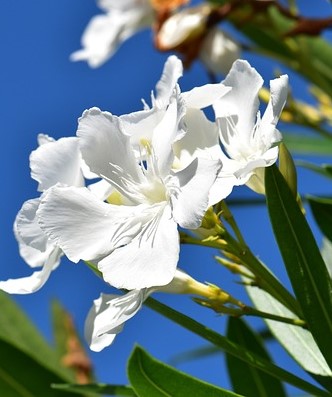
Oleander has been traditionally used to treat various conditions such as ulcers, hemorrhoids, leprosy, ringworm, herpes, and abscesses. Its notable biological activities include antioxidant, antiviral, antimalarial, analgesic, diuretic, antibacterial, anticancer, anti-inflammatory, and antifungal properties.
Bioactive Potential: Research suggests that extracts derived from oleander exhibit a range of biological activities, including:
- Antioxidant Properties: Studies indicate oleander extracts possess free radical scavenging and reducing power capabilities, potentially contributing to cellular protection against oxidative stress.
- Anti-inflammatory Activity: Extracts have demonstrated anti-inflammatory effects in animal models, suggesting a potential role in managing inflammatory conditions.
- Antimicrobial Effects: Oleander extracts have shown activity against certain bacterial strains, hinting at potential applications in combating bacterial infections.
- Larvicidal Properties: Research suggests oleander extracts can effectively kill mosquito larvae, presenting a possible eco-friendly approach to mosquito control.
- Anticancer Potential: Preliminary studies suggest oleandrin, a key component of oleander extracts, might exhibit anti-cancer properties. However, further investigation is necessary.
- Immune System Modulation: The effects of oleander extracts on the immune system appear dose-dependent. While some studies report immune stimulation at specific doses, others suggest immune suppression at higher concentrations.
Critical Considerations: It is paramount to emphasize the distinction between the potential benefits of oleander extracts and the inherent dangers of the raw plant.
- Toxicity: Nerium oleander is a highly poisonous plant. All parts, particularly seeds and roots, contain cardiac glycosides, which can disrupt heart function and lead to serious health consequences, even death, if ingested.
- Unproven Medical Uses: The effectiveness of oleander extracts for various medical applications remains largely unproven and requires rigorous clinical trials to establish safety and efficacy.
- Extracts vs. Raw Plant: It is crucial to reiterate that the potential benefits discussed here pertain solely to processed extracts derived from the plant under controlled conditions. Direct contact with or ingestion of any part of the oleander plant is strictly contraindicated.
Oleandrin: Promising But Problematic
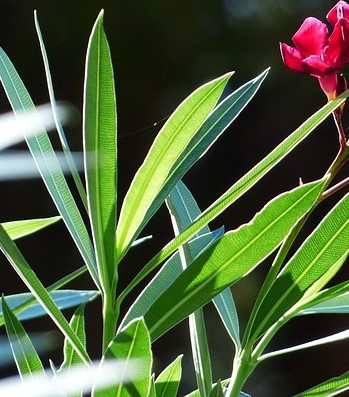
Oleandrin, a compound from the Nerium oleander plant, exhibits significant therapeutic potential but is highly toxic, posing challenges for clinical application.
Strategies to Reduce Toxicity
To address oleandrin’s toxicity, researchers are exploring various approaches. Enhancing delivery systems through encapsulation technologies like liposomes and micelles can improve targeting and reduce off-target effects. Personalized medicine, which tailors dosing based on genetic variations, may also help minimize toxicity.
Molecular Modifications and Metabolic Insights
Modifying the oleandrin molecule, inspired by research on similar compounds, is a promising strategy. Additionally, understanding oleandrin’s metabolism and its interaction with the gut microbiome can enable manipulation of the enterohepatic circulation process, potentially reducing systemic exposure and toxicity.
Advanced Technologies and Biomarker Identification
Advanced omics technologies are being used to identify biomarkers of oleandrin toxicity. These biomarkers can aid in both forensic and clinical settings, ensuring safer and more effective use of oleandrin.
Potential Benefits of Oleander Extract for Harmful Diseases
Oleander plant extracts contain compounds that show promise in fighting cancer cells in lab studies. These extracts are effective against a wide range of cancers, including colon, lung, uterus, and breast cancer cell lines, reducing cell viability by up to 70%. Although some drugs derived from oleander extracts have shown efficacy against various cancers, their toxicity requires further research to ensure safe and effective use in humans. Future studies should also explore interactions with existing cancer treatments.