

Purslane, Pussley, Pigweed, Portulaca, Pourpier, Verdolaga, Portulak, Porcellana, Beldroega, Postelein, Semizotu, Αντράκλα, Портулак, 马齿苋, 马齿菜, スベリヒユ, 쇠비름, कुलफा, Gelang pasir, Gulasiman, Rau sam, بَقْلَة, رجلة
Purslane (Portulaca oleracea L.) is a highly nutritious plant valued in various cultures. It is often considered a weed, yet it offers exceptional health benefits. This hardy succulent grows in many environments and has been used for centuries in traditional medicine and cuisine.
Botanical Description
Physical Characteristics
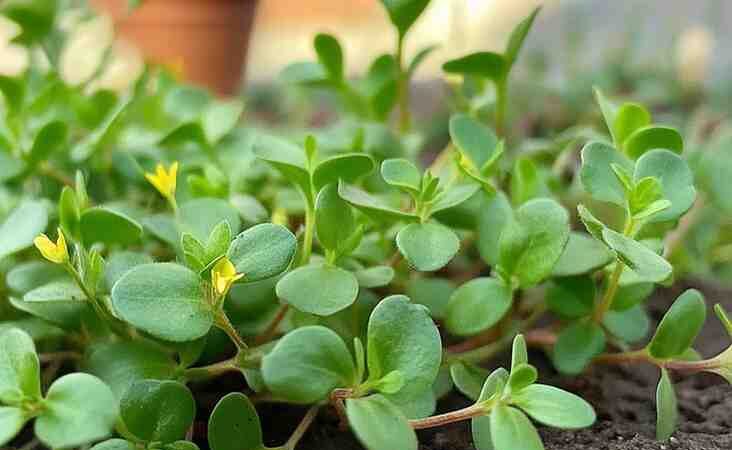
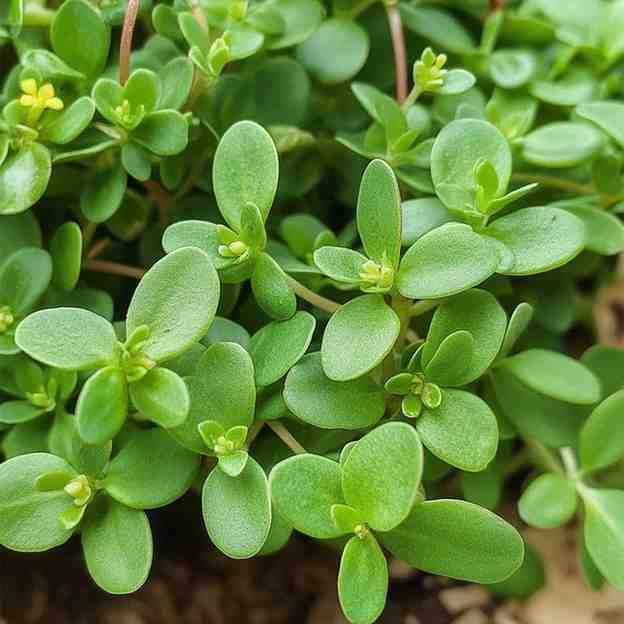
Purslane is a low-growing, succulent herb with smooth reddish stems. It spreads along the ground, forming dense mats.
Stem and Leaves
- The stems are fleshy, reddish, and smooth.
- The leaves are small, oval, and arranged alternately.
Flowers and Seeds
- Small yellow flowers bloom on sunny mornings.
- The flowers develop into seed capsules containing numerous tiny seeds.
Growth Habits
- Purslane thrives in warm climates and well-drained soils.
- It grows quickly, making it a common plant in gardens and fields.
Historical Background of Purslane
Etymology and Naming
The name Portulaca dates back to Pliny the Elder (AD 23-79), who first referred to purslane using this Latin term. The name alludes to the plant’s purging properties, which were recognized in early medicine.
Evolution of the English Name
- In 1387, purslane was recorded as “purcelan” in a 14th-century manuscript from Pembroke College, Oxford.
- Over time, it took different spellings such as purcelane, purselaine, and pesseline.
- The modern spelling “purslane” was standardized by Asa Gray in 1857 in his First Lessons in Botany.
Taxonomic Classification
- Carl Linnaeus (1753) officially described the genus Portulaca in his work Species Plantarum.
- Antoine Laurent de Jussieu (1789) classified the Portulacaceae family.
- The species name oleracea is derived from Latin, meaning “suitable for food or cultivation”.
Historical Uses and Spread
Purslane has been recognized for its medicinal and culinary value since ancient times, not only in Western traditions but also in Arabic and Chinese medicine.
Ancient Western Descriptions
- The Greek physician Dioscorides (1st century AD) described purslane’s cooling properties and its use in treating goiter and inflammation.
- Purslane was known to grow in rocky areas and cultivated gardens.
Contributions from Arabic and Islamic Medicine
- Ibn al-Baitar (1197–1248), an Andalusian pharmacist and botanist, wrote extensively about purslane’s medicinal properties. He described it as a cooling agent that helped relieve stomach inflammation, fever, and excessive thirst.
- Ibn Sina (Avicenna, 980–1037), a Persian physician, recommended purslane to treat ulcers, headaches, and skin conditions. He noted that its seeds could reduce thirst and prevent heat-related illnesses in hot climates.
- Al-Dimashqi (1256–1327), a Syrian scholar, referred to purslane as a powerful remedy for digestive issues and blood disorders.
- In Egypt and the Levant, purslane was called “Al-Baqla Al-Hamqaa” (البقلة الحمقاء), meaning “the foolish herb,” because it grows in riverbeds and gets washed away by water.
Traditional Chinese Medicine (TCM) Perspective
- In Traditional Chinese Medicine (TCM), purslane is used for similar medicinal purposes as in Arabic and Greek traditions.
- It is known for treating intestinal infections, dysentery, and inflammation.
- Purslane is also used as a natural antidote for snake, scorpion, and tarantula bites.
- Chinese medicine practitioners apply purslane as a topical treatment for skin conditions, using its juice or paste to relieve rashes, eczema, and swelling.
- It is used to lower fever and reduce internal heat, making it effective in treating high body temperature and infections.
- Modern Chinese clinical studies have shown that purslane can eliminate intestinal parasites and is particularly effective against roundworms.
- Research has also demonstrated that purslane extract stimulates strong uterine contractions when injected, while oral consumption leads to milder contractions, making it a potential natural treatment for menstrual regulation.
Introduction to North America
- There is debate about when and how purslane arrived in North America.
- Some experts believe Native Americans cultivated it alongside corn and pumpkins.
- Others argue it was introduced by post-Columbian European immigrants.
- Pollen and seeds found in Canada and the U.S. suggest its presence as early as 1350 AD or possibly 1000 BC.
Global Distribution
Purslane thrives in diverse climates across temperate and tropical regions, from Europe and Asia to Africa and the Americas.
Preferred Growing Conditions
- It grows in gardens, fields, eroded slopes, and waste areas.
- Adaptable to various soil types, from moist, rich soils to dry, compacted areas.
- Found at elevations up to 3,835 meters.
Regional Presence
- In the U.S., it is most abundant in the northeastern states.
- Less common in the Pacific Northwest.
- Rarely found north of latitude 60°N.
- In the Arab world, purslane is commonly found in river valleys, abandoned farms, and roadsides.
- In China, purslane has been a staple in herbal medicine for centuries and continues to be used today in traditional remedies.
Purslane in Cultural and Religious Contexts
Middle Eastern Folk Medicine
- Purslane has been used in Middle Eastern folk medicine for its healing properties. It is applied topically to treat skin irritations and inflammation and consumed as food to aid digestive health. Purslane seeds, rather than the leaves, are sometimes brewed into medicinal infusions to help with intestinal health.
China: “Ma Chi Xian” (马齿苋)
- In Chinese culture, purslane is known as “Ma Chi Xian” (马齿苋), meaning “horse tooth amaranth” due to its leaf shape. It has been a part of Traditional Chinese Medicine (TCM) for centuries, valued for its cooling properties and used to treat fevers, diarrhea, and urinary tract infections. It is also believed to detoxify the body and improve blood circulation.
Greece: “Andrakla” (Αντράκλα)
- In Greece, purslane is called “Andrakla” (Αντράκλα) and is a staple in Mediterranean cuisine. It is often eaten raw in salads or cooked in stews and soups. It is particularly valued as a summer ingredient, as it retains moisture and adds freshness to meals.
Turkey: “Semizotu”
- In Turkey, purslane is known as “Semizotu”, meaning “oily herb” due to its high omega-3 fatty acid content. It is widely used in Turkish cuisine, especially in dishes like “semizotu salatası” (purslane salad) and “semizotu pilavı” (purslane rice). Turkish folk medicine values it for its anti-inflammatory properties and its ability to aid digestion.
India: “Kulfa” or “Paruppu Keerai”
- In India, purslane is called “Kulfa” in Hindi and “Paruppu Keerai” in Tamil. It is a common leafy green vegetable in South Indian cuisine, often added to dals (lentil dishes), curries, and stir-fries. Ayurvedic medicine recognizes purslane for its cooling effects and its ability to treat jaundice, dysentery, and skin rashes.
Persian Culture
- In Persian cuisine, purslane is called “Khorfeh” and is commonly added to salads, soups, and stews, especially during the hot summer months due to its hydrating and cooling properties. It is particularly popular in Shirazi-style salads, where it is mixed with cucumbers, tomatoes, onions, lemon juice, and olive oil.
Morocco: “Rejla”
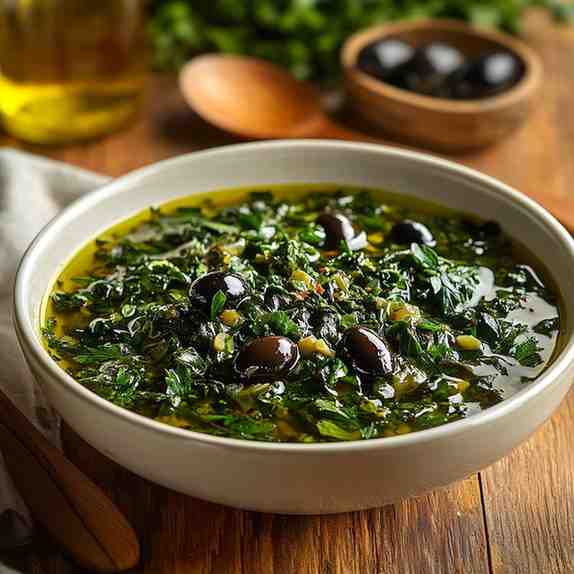
- In Morocco, purslane is known as “Rejla” (رجلة) and is a key ingredient in the famous dish “Bkoula.” This dish is prepared with purslane, olive oil, parsley, coriander, and garnished with preserved lemon and olives. It is traditionally eaten from mid-summer to early fall, as purslane grows abundantly during that season.
Ancient Egypt
- Archaeological findings indicate that purslane was cultivated in Egypt as early as 2000 BCE. It was likely used for both food and medicinal purposes. Some historians suggest it was valued for its fertility-enhancing properties and nutrient-rich profile.
Native American Uses
- Many Native American tribes used purslane as a food source and medicinal herb:
- The Navajo applied purslane to treat burns and skin irritations.
- The Cherokee consumed it to ease stomachaches and diarrhea.
Purslane Nutritional Profile
Purslane (Portulaca oleracea) is one of the most nutrient-dense wild plants, offering a rich source of vitamins, minerals, omega-3 fatty acids, and antioxidants.
Macronutrient Composition
Low in Calories
- Purslane is a low-calorie plant, providing approximately 16 kcal per 100 grams, making it a great addition to a balanced diet.
Carbohydrates and Protein
- Contains about 3.4 grams of carbohydrates per 100 grams.
- Provides 1.3 grams of protein per 100 grams, contributing to muscle maintenance and energy.
Vitamins and Minerals
Vitamin A
- High in vitamin A (1,320 IU per 100 grams), which supports vision, skin health, and immune function.
Vitamin C
- Contains 21 mg of vitamin C per 100 grams, essential for collagen production, wound healing, and immune defense.
B-Complex Vitamins
- Provides riboflavin (0.112 mg), niacin (0.480 mg), and pyridoxine (0.073 mg) per 100 grams, which are crucial for energy metabolism and nervous system health.
Minerals
- Potassium (494 mg per 100 grams): Helps regulate blood pressure and muscle contractions.
- Magnesium (68 mg per 100 grams): Supports nerve function and bone health.
- Calcium (65 mg per 100 grams): Strengthens bones and teeth.
- Phosphorus (44 mg per 100 grams): Essential for cellular repair and energy production.
- Iron (1.99 mg per 100 grams): Plays a key role in oxygen transport and preventing anemia.
Omega-3 Fatty Acids
Rich in Alpha-Linolenic Acid (ALA)
- One of the best plant-based sources of ALA, providing 300-400 mg per 100 grams.
- Supports heart health, reduces inflammation, and promotes brain function.
Antioxidant Properties
Beta-Carotene and Glutathione
- Beta-carotene (1.9 mg per 100 grams): A powerful antioxidant that protects against cell damage and supports skin and eye health.
- Glutathione (14.8 mg per 100 grams): Helps neutralize free radicals, reducing the risk of chronic diseases and slowing aging.
Culinary Uses
Purslane is an edible plant enjoyed in traditional and modern cuisines worldwide. Its slightly lemony, tangy taste and crunchy texture make it a versatile ingredient in a variety of dishes.
Traditional Dishes
Greece: Greek-Style Purslane Salad
- Used in salads with feta cheese, olive oil, and herbs.
- Greek-style chopped purslane salad includes tomatoes, olives, capers, and oregano.
Turkey: Semizotu Salatası
- Mixed with yogurt and garlic to make a cold, refreshing dish called Semizotu Salatası.
Mexico: Purslane with Pork in Salsa Verde
- Cooked with pork and salsa verde, adding a tangy and nutritious element to the dish.
Italy: Sicilian Purslane Salad
- Includes wild purslane, lettuce, cherry tomatoes, olives, capers, balsamic vinegar, and olive oil.
Morocco: Bkoula (Traditional Purslane Dish)
- Known as Rejla (رجلة), purslane is used in the dish “Bkoula”, cooked with olive oil, parsley, coriander, and garnished with preserved lemon and olives.
Modern Culinary Applications
Lemony French Lentil Salad
- A protein-rich cold salad combining lentils, purslane, and fresh herbs.
Soups and Stews
- Used to enhance flavor and texture in broths and vegetable stews.
Omelets and Scrambles
- Mixed with eggs and cheese for a nutrient-dense breakfast.
Smoothies and Juices
- Blended into smoothies and juices, providing a boost of omega-3s and minerals.
Pickled Purslane
- Preserved in apple cider vinegar with dill and spices to use as a condiment in sandwiches and salads.
Preparation Methods
Raw
- Adds crunch and a mild tangy flavor to salads and sandwiches.
- Often used in Mediterranean and Greek dishes.
Cooked
- Softens in texture and blends well in soups, stews, and sautés.
- Often paired with meat, grains, or dairy-based dishes.
Blanched
- Reduces oxalate content, improving digestibility.
- Commonly done before mixing into lentil dishes, pilafs, or pickling.
Safety of Purslane for Humans and Animals
Purslane (Portulaca oleracea) is a non-toxic and highly nutritious plant that is safe for human consumption, including infants and children. It is widely consumed in many cultures and has no recorded cases of toxicity in humans. However, while purslane is safe for people, it contains soluble calcium oxalates, which can be harmful to animals, particularly pets and livestock.
Human Safety and Benefits
- Purslane’s leaves, stems, and flowers are completely edible and rich in vitamins, minerals, and omega-3 fatty acids.
- It is regularly included in traditional dishes, salads, and stews around the world.
- Scientific studies confirm that purslane does not pose any health risks to humans, including toddlers and infants.
Risks for Animals
- Unlike humans, certain animals (dogs, cats, and livestock) cannot process calcium oxalates efficiently, leading to potential toxicity if consumed in large amounts.
- In animals, ingestion may cause symptoms like vomiting, tremors, or kidney issues.
- Pet owners should keep purslane out of reach to prevent accidental ingestion.
Key Takeaway
Purslane is a safe and beneficial plant for humans but can be toxic to animals due to its calcium oxalate content. While people can enjoy its nutritional value, pet owners and farmers should exercise caution to protect their animals from potential harm.