

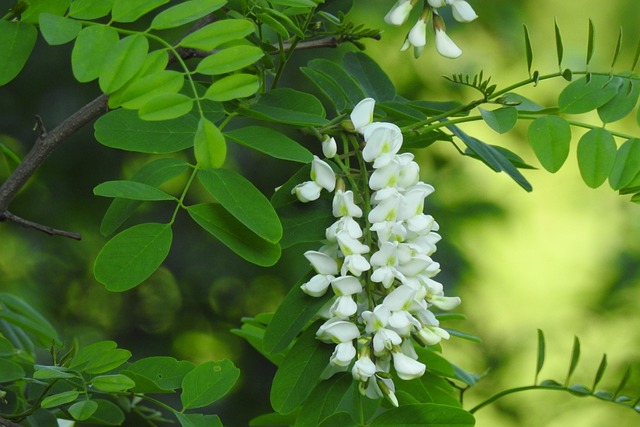
Black Locust (Robinia pseudoacacia) Characteristics
Black Locust (Robinia pseudoacacia), a member of the Fabaceae (pea) family, also goes by several names including False Acacia, Locust Tree, and Black Locust Tree. This large, ornamental tree boasts alternate, compound leaves. Each leaf features 2-12 pairs of opposing leaflets with an additional terminal leaflet at the tip. The oblong, elliptic, or ovate leaf blades have smooth, entire margins. The tree itself is characterized by unbranched spines and displays fragrant white to cream flowers with yellow spots.
Origin and Historical Facts
Native to North America, Black Locust was introduced to Europe in the early 17th century by Jean Robin and his son Vespasien.
- Now common across a wide range of climates, from warm southern regions to cool northern areas.
- Thrives in sub-Mediterranean to warm continental climates and various soil types.
- One of the earliest planted trees from 1601 still stands in Square René Viviani, Paris.
Black Locust: A Double-Edged Sword for Ecosystems
The black locust (Robinia pseudoacacia) plays a fascinating, and sometimes contradictory, role in the environment. This seemingly ordinary tree possesses a surprising duality, acting as a powerful tool for soil restoration and a potential threat to established ecosystems.
Ecological Role of Robinia pseudoacacia (Benefits):
- Nitrogen Fixation: enriches soil with essential nutrients for plant growth.
- Erosion Control: dense root system stabilizes soil and prevents erosion.
- Improved Soil Structure: promotes better water drainage and air circulation.
The Invasive Side (Risks):
- Rapid Growth: can outcompete native plants, reducing biodiversity.
- Ecosystem Disruption: alters natural balance, impacting local flora and fauna.
- Management Challenge: requires careful control to prevent negative impacts.
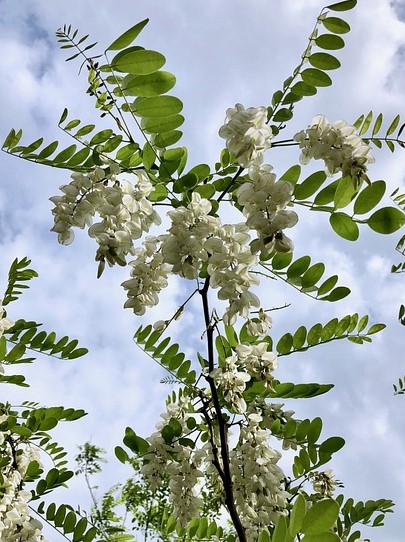
Black Locust’s Rich Chemistry
The Black Locust tree, native to North America, is admired not only for its delicate flowers and unique leaves but also for its rich chemical profile.
- Flavonoids: The leaves contain antioxidant flavonoids such as acacetin, apigenin, diosmetin, and luteolin.
- Stilbenes: The tree includes stilbenes like piceatannol and resveratrol, known for their antioxidant and anti-inflammatory properties.
- Alkaloids: The tree may contain various alkaloids, nitrogen-containing compounds with diverse biological effects. Research is ongoing to identify the specific types of alkaloids present and understand their effects.
- Tannins: The tree contains tannins, astringent compounds with potential medicinal applications.
Chemical Compounds in Robinia pseudoacacia
Robinia pseudoacacia contains various chemical compounds with distinct properties. The primary toxic components are found in different parts of the plant, each contributing to its overall chemical profile.
- Robine: Found in the bark, this toxalbumin alters tissues, paralyzes the nervous system, and causes red blood cells to clump together.
- Robinine: Present in leaves and seeds.
- Lectins: Toxic proteins, including phasine, that affect both humans and animals.
- Acacetin: A coloring matter found in the vegetative parts.
- Other Components: Includes indican, calcium phosphate, carotene, tannin, and gums.
- Flowers: Contain invertase, asparagine, and robinine (a special glucoside).
- Fatty Acids: Studies have shown that Black Locust foliage contains a variety of fatty acids, including both saturated and unsaturated types. However, the specific profile differs from crops commonly used as animal feed, with Black Locust leaves having a lower proportion of polyunsaturated fatty acids
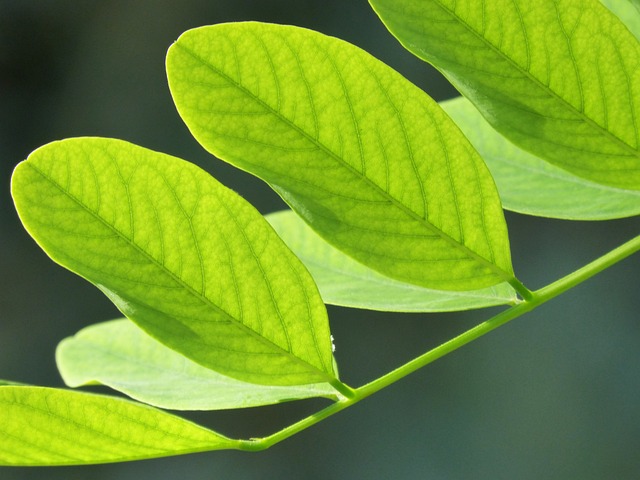
Toxicity of Robinia pseudoacacia
The ingestion of Robinia pseudoacacia can be highly toxic to various animals, particularly horses. The bark, roots, and young leaves pose significant risks, and precautions are necessary when old trees are cut down to prevent livestock from consuming the new shoots.
- Ingestion can be toxic to many animals, especially horses.
- Bark, roots, and young leaves are particularly harmful.
- Livestock must be prevented from eating shoots from cut-down trees.
- Contains robine (bark) and robinine (leaves and seeds), which are toxic lectins.
- Sap is sweet but tree parts contain harmful compounds.
| Note on Confusion with Sophora Robinia pseudoacacia is sometimes mistaken for Sophora species. Accurate identification is crucial to avoid confusion between the toxic properties of Robinia and those of Sophora, which may have different chemical characteristics and toxicity levels. |
Black Locust in Traditional Medicine (Despite Toxicity)
| Bark: Properties: Emetic (induces vomiting), purgative (promotes bowel movements). Active ingredient: Robinin (a lectin thought to regulate antibody levels). Traditional uses: Tonic tea, emetic (to induce vomiting), toothache relief. Leaves: Properties: Antispasmodic (relaxes muscles). Flowers: Properties: Calming, tonic (invigorating), astringent (causes tissue contraction), cholagogue (promotes bile flow). Uses: Medicinal tea (astringent, antispasmodic, calming), essential oil (perfumery, cosmetics). Honey: Rich in beneficial sugars, minerals, and proteins. Used in cosmetics (soaps, shampoos) and for wound healing due to its antibacterial properties. Roots (Traditional Uses): Properties: Laxative, purgative, emetic (though toxic). |
Potential Benefits of Black Locust Components
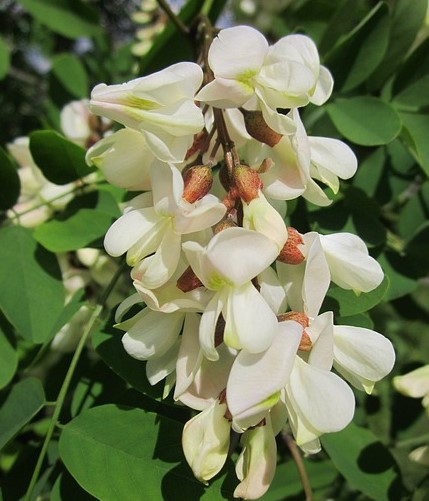
The Black Locust tree, native to North America, offers more than just aesthetic beauty with its delicate flowers and unique leaves. It contains a variety of compounds that contribute to its rich chemical profile, suggesting potential medicinal benefits.
Anthocyanins
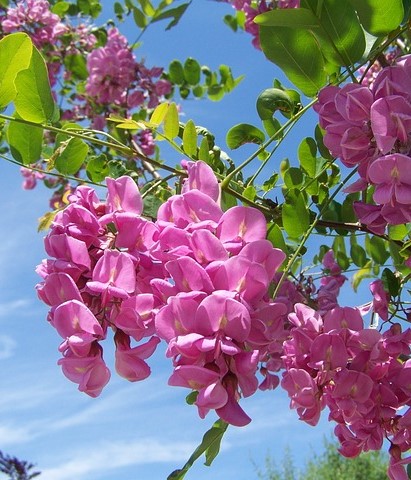
Main Component in Bristly Locust (Pink Flowers): The study found significantly higher levels of anthocyanins in pink bristly locust flowers compared to white Black Locust flowers. Antioxidant Power: Anthocyanins are well-known for their strong antioxidant activity. Potential Health Benefits: Studies suggest anthocyanins may contribute to reducing the risk of chronic diseases such as heart disease, diabetes, and certain cancers.
Flavonoids
Present in Both Black and Bristly Locust: The study identified various flavonoid compounds in both Black Locust and bristly locust flowers, including:
– Total Flavonols: Black Locust flowers had a slightly higher concentration.
– Luteolin and Myricetin: Higher levels were found in white Black Locust flowers.
– Kaempferol: More concentrated in pink bristly locust flowers.
Potential Health Benefits: Flavonoids contribute to a range of health benefits including anti-inflammatory, anti-cancer, and neuroprotective effects. They help in reducing oxidative stress, modulating immune response, and protecting neurons from damage. Flavonoids also support cardiovascular health by improving blood vessel function and reducing blood pressure.
Black Locust Shows Promise for Oral Health
Robinia pseudoacacia, shows promise for oral health. A study found that the plant extract and specific fractions effectively inhibited the growth of Streptococcus mutans, a bacterium linked to tooth decay. Myricetin, a potentially active compound identified in Robinia, may contribute to these antibacterial properties. These findings suggest that Robinia pseudoacacia could be a valuable resource for developing natural oral hygiene products or treatments for dental plaque and periodontal disease.
Antifungal and Antimicrobial Activity of Black Locust
Robinia pseudoacacia L. (Black Locust) shows significant antifungal and antimicrobial properties. Extracts from flowers and seeds were effective against Gram-positive bacteria, while bark and leaf extracts inhibited Escherichia coli, Pseudomonas, Proteus, Salmonella, and Candida albicans. These findings suggest Black Locust could be a natural alternative for antimicrobial and antifungal treatments.
Robinia Pseudoacacia for GERD Treatment
A recent study investigated the effectiveness of Robinia pseudoacacia in treating Gastroesophageal Reflux Disease (GERD). The findings show promise, with a majority of participants experiencing improvement in their GERD symptoms after taking Robinia pseudoacacia. However, more research is needed to confirm these results, as the study was small and lacked a comparison group.
Natural Boost for Safe Moisturizers
A study successfully improved plum seed oil stability for cosmetics using natural antioxidants from black locust flowers via an eco-friendly maceration process, reducing reliance on synthetic additives.
- Natural Antioxidants: Black locust flowers, rich in natural antioxidants, effectively stabilize the plum seed oil.
- Safer Cosmetics: The stabilized oil allows for the development of safe and stable moisturizing creams without synthetic antioxidants, potentially reducing skin irritation and allergies.
Black Locust (Robinia pseudo-acacia) in Homeopathy:
Robinia pseudoacacia, derived from black locust, is a homeopathic remedy available in tiny granules. Dosing varies by individual and condition, so consult a healthcare professional. This remedy may help with:
- Dyspepsia: Indigestion with upper abdominal discomfort, bloating, and early satiety.
- Gastritis: Stomach lining inflammation causing heartburn, nausea, vomiting, and abdominal pain.
- Gastroduodenal Ulcers: Sores in the stomach lining or upper small intestine, causing pain, indigestion, and bleeding.
Black Locust: A Beautiful Tree with a Hidden Danger
Black Locust (Robinia pseudoacacia) is a visually appealing tree often used for erosion control. While it boasts beautiful flowers and provides valuable environmental benefits, it’s crucial to be aware of its potential toxicity.
Humans: Rare Ingestion, Symptoms, and Treatment
In rare cases of Black Locust ingestion by humans, symptoms like vomiting may occur within a few hours. If this happens, immediate medical attention is essential. Treatment typically involves medication to control nausea, activated charcoal to absorb toxins, and intravenous fluids for hydration. Fortunately, with supportive care and observation, most patients recover well.
Animals: Serious Health Risks
For animals, Black Locust poses a more serious threat. The tree is particularly dangerous for livestock like cattle, who may ingest its toxic parts while grazing. Sprouts, pods, seeds, bark, and even water contaminated by fallen pods can cause poisoning. The culprit is a toxin called robinine, which can disrupt the heart, leading to a rapid and irregular heartbeat, shallow breathing, depression, and digestive issues. In severe cases, cardiac failure and death can occur. If you suspect animal poisoning from Black Locust, seek immediate veterinary care.