

Before delving into the world of Ras el Hanout, the king of Moroccan spices, let’s set the stage with some historical context. While similar spice blends exist in other North African countries, often with fewer components, Morocco’s Ras el Hanout stands out for its unique character. This distinction stems from a confluence of factors: bustling trade routes, rich cultural exchange, and the very essence of Moroccan society itself.
Morocco’s Imperial Cities: A Crucible of Flavor
Morocco boasts a rich tapestry of imperial cities, each contributing significantly to the development of its renowned cuisine. Fes, with its labyrinthine medina, was a major center of commerce for centuries. Here, traders from across North Africa, the Middle East, and beyond brought their prized spices. Skilled artisans in Fes meticulously blended these exotic ingredients, giving rise to the complex flavor profile that defines Moroccan cuisine.
Beyond Fes: A Chorus of Culinary Influences
However, the story doesn’t end in Fes. Marrakech, another historic imperial city, was a major trade hub on the trans-Saharan caravan routes. This bustling metropolis attracted merchants carrying spices from sub-Saharan Africa, introducing new ingredients and flavors to the Moroccan table. Meknes, known for its imperial palaces and gardens, also played a role. Royal courts across Morocco demanded the finest ingredients, fostering a culture of culinary innovation and experimentation with spices.
Coastal Cities: A Gateway to Global Spices
Morocco’s coastal cities, like Essaouira and Salé, served as vital ports of trade. European and Asian influences reached Moroccan shores through these gateways, adding another layer of complexity to the spice palette. Rabat, the current capital, also played a part. As the seat of power, Rabat attracted skilled cooks and artisans from across the kingdom, further enriching the culinary landscape.
Msskhen vs Ras el Hanout: A Tale of Two Spice Blends
Within the walls of these historic cities, a distinction emerged between two similar spice blends. “Msskhen” (meaning “that which warms the body” in Arabic) served a practical purpose, warming bodies during the cool Moroccan winters. But Ras el Hanout, literally translating to “the head of the shop” or the finest selection of spices, was reserved for special occasions and celebrations. The specific spices used and their ratios were often closely guarded secrets, passed down through generations within families.
Mssakhen: The Spice of Warmth and Tradition
Mssakhen, meaning “that which warms the body” in Arabic, is a lighter version of ras el hanout and an essential spice blend in Moroccan cuisine. It goes beyond simply adding flavor, playing an important role in cultural practices and popular imagination.
A Wintertime Essential
Mssakhen shines most during Morocco’s cool winters. Unlike its more prestigious cousin, Ras el Hanout, mssakhen isn’t reserved for special occasions. This warming blend is a staple in many households, readily incorporated into soups, stews, couscous, and even beverages to combat the chill. The presence of ginger, turmeric, fenugreek, and other spices with inherent warming properties like watercress, galangal root, dried apple mint leaves, thyme, and nutmeg justifies its place as a wintertime essential.
Beyond the Cold: A Postpartum Tradition
However, the significance of mssken extends beyond the comfort it provides during cold days. One of its most intriguing uses is in the postpartum dish “Rfissa.” This nourishing stew, featuring mssakhen and farm chicken, is specifically prepared for women after childbirth. Traditional belief holds that mssakhen’s combination of ingredients helps restore a mother’s strength and stimulate lactation. The specific inclusion of fenugreek and lentils alongside the warming spices is believed to particularly enhance these properties.
A Symbol of Hope
Mssakhen also holds a special place in the realm of Moroccan social customs. Women across the country share the belief that mssakhen enhances fertility, contributing to the desire for children. This association between spices and female fertility is a testament to the rich cultural understanding of health and well-being in Morocco. While not a daily occurrence, the use of mssaken in “Rfissa” exemplifies its multifaceted role in Moroccan life. It’s a symbol of warmth, a promoter of health, and a link to cherished traditions, particularly the hope for a thriving family.
| Rfissa: A Warming Moroccan Stew Rfissa is a beloved dish in Morocco, particularly during occasions and chilly days. This nutritious stew is known for its health benefits, believed to generate body heat and aid in postpartum recovery. Key ingredients: Bread or Trid (a thin, crepe-like pastry) Poultry (farm chicken is common) Legumes (including lentils and beans) along with vegetables such as onion and garlic Spices (especially mssakhen) Significance: A family dish enjoyed during celebrations and gatherings. Holds particular importance after childbirth due to its believed health benefits for new mothers. The inclusion of fenugreek, lentils, and the spice blend mssakhen is thought to support lactation. |
Mssakhen Ingredients
Msskhen’s unique character lies in its clever combination of spices, medicinal plants, and even seeds. This base of spices is then bolstered by the inclusion of various dried herbs known for their health benefits.
| Spice Ingredient | Spice Scientific Name | Herb Ingredient | Herb Scientific Name |
|---|---|---|---|
| Fenugreek | Trigonella foenum-graecum | Thyme | Thymus vulgaris |
| Long Pepper | Piper longum | Apple Mint | Mentha suaveolens |
| Watercress Seeds | Nasturtium officinale | Pennyroyal | Mentha pulegium |
| Ginger | Zingiber officinale | Rosemary | Salvia rosmarinus |
| Galangal | Alpinia galanga | Lavender | Lavandula angustifolia |
| Turmeric | Curcuma longa | ||
| Nutmeg | Myristica fragrans | ||
| Grains of Paradise | Aframomum melegueta | ||
| Clove | Syzygium aromaticum | ||
| Cardamom | Elettaria cardamomum | ||
| Cinnamon | Cinnamomum verum | ||
| Madder | Rubia tinctorum | ||
| Star Anise | Illicium verum |
The Origins of Ras el Hanout: Morocco’s Trade Routes
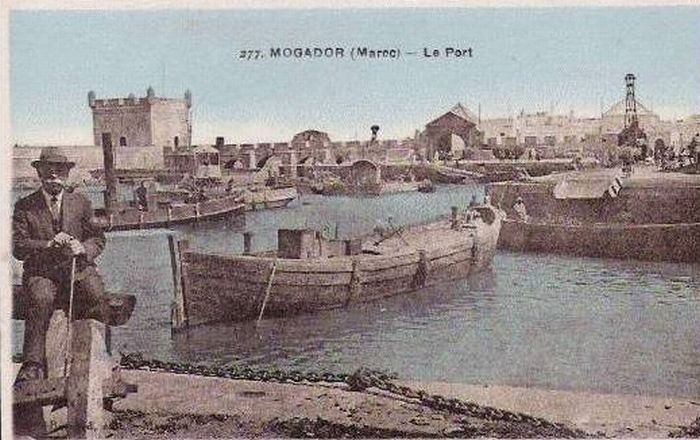
Tracing the origins of ras el hanout requires delving into Morocco’s historic trade routes. Caravans loaded with various goods, especially spices, crossed the vast deserts, linking West Africa and Egypt to Morocco’s major commercial points. These included cities like Fes and Marrakech, bustling hubs that received foreign goods, and ports like Mogador, and Tangier, which facilitated export of Morocco’s native products.
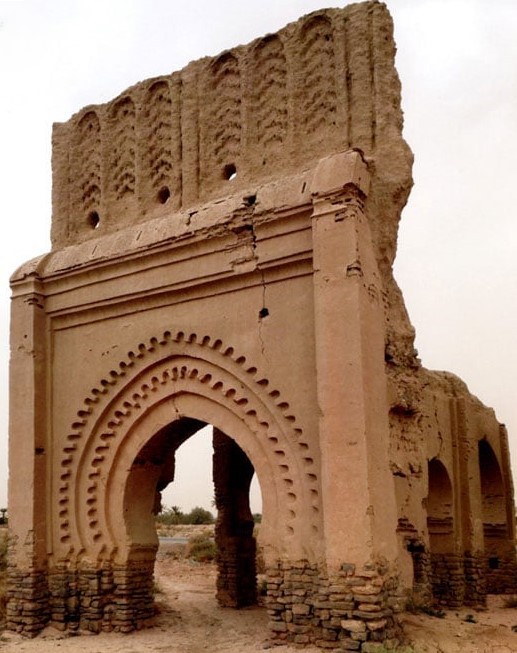
Nestled within the Tafilalt oasis, Sijilmassa served as a crucial waypoint in Morocco’s historic trade routes. Goods and spices from sub-Saharan regions flowed through this center before reaching other Moroccan towns, like Fez. Conversely, products arriving by ship at Mogador spread throughout Morocco.
This intricate network facilitated the exchange of not just African spices but also Asian treasures. Spices like cinnamon, ginger, and cardamom undertook a long journey, traveling from their points of origin in India, China, and Persia along established trade routes to the Arabian Peninsula. Finally, they reached Morocco via a designated trade route.
| In his book “Voyage dans l’empire du Maroc” (Journey in the Empire of Morocco), William Lempriere2 (1763-1834) mentions the port of Mogador. Lempriere describes Mogador as a bustling trading post with merchants from various countries. Lempriere (pp. 66-67) mentions that the port exported mules to the United States, leather and hides to Europe, along with a variety of goods like gum arabic, ostrich feathers, copper, wax, ivory, figs, dates, raisins, olives and oils, carpets, and more. In exchange, they imported wood, cannon powder, lead, iron bars, hardware, mirrors, tobacco pouches, watches, small knives, and other items. This description highlights the importance of Mogador as a center for trade between Morocco and Europe. |
A Spice for the Privileged
However, these prized ingredients weren’t available to everyone. While readily found today, ras el hanout was once a privilege reserved for a select few in past centuries, primarily those residing in imperial cities and enjoying a comfortable lifestyle. The use of ras el hanout transcended mere flavor, holding deeper social and cultural significance. For example, while mssakhen was used to promote women’s fertility, some believed certain secret ingredients within ras el hanout possessed similar properties, acting as aphrodisiacs for men.
The inclusion of ras el hanout in special dishes like herb-stuffed chicken, beef tagines, veal shank tanjia, Morocco’s iconic chicken pastilla, known as Bastela (a delectable crispy pie often served at weddings), and the sweet-savory mrouzia (made with saffron, raisins, smen, and ras el hanout) further highlights the exclusivity of these meals. Their unique blend of flavors not only tantalized the taste buds but also held a symbolic association with enhanced male fertility, akin to the role of mssakhen for women.
Z. Guinaudeau’s Classic Cookbook: Exploring Moroccan Cuisine
Zette Guinaudeau-Franc’s book, “Traditional Moroccan Cuisine: Recipes from Fez,” is a well-respected resource that explores the rich culture and history behind Moroccan food. Originally published in French as “Fès vu par sa cuisine” in 1958, the book gained fame after J.E. Harris translated it as “Fez: Traditional Moroccan Cooking Book” in 1964.
Within this in-depth exploration, various versions of Ras el hanout abound, each presenting an extensive array of ingredients. However, the core and presumably genuine basic recipe, safeguarded by spice merchants (al-Attar) and herbalists for generations, is unveiled in the book.3 The author meticulously outlines the spices utilized, alongside their countries of origin. This foundational recipe includes the following ingredients:
| Spice | Country of Origin | Spice | Country of Origin |
|---|---|---|---|
| Cardamom | Malabar, Sri Lanka | Melegueta pepper | Ivory Coast |
| Mace | Java, Sumatra | Nutmeg | Java, Sumatra |
| Galangal root | China | Allspice | Jamaica |
| Cantharides | Spain | Cinnamon | Maldives, Sri Lanka |
| Cyparaceae | Sudan | Long pepper | Malaya |
| Cloves | Zanzibar | Curcuma | India |
| Ginger | India | Black Pepper | Sri Lanka |
| White ginger | Japan | Piper cubeba | Malaya, Borneo |
| Orris root | Morocco | Asclepias dried fruit | Ethiopia |
| Rose buds | Morocco | Ash keys | Morocco |
| Belladonna berries | Morocco | Fennel | Morocco |
| Monk’s Pepper | Morocco | Lavender | Morocco |
| Other spices can be added to balance the flavor, such as cumin, garlic and onion powder, coriander seeds, cayenne pepper, caraway, saffron, and anise seeds. For a homemade preparation, you could choose a few key ingredients and create a spice blend based on them. Ingredients such as cumin, ginger, turmeric, cinnamon, black pepper, white pepper, coriander, cloves, nutmeg, cardamone, and chili could be utilized to craft a unique spice mix. |
Debbonat l-Hend: The So-Called “Spanish Fly”
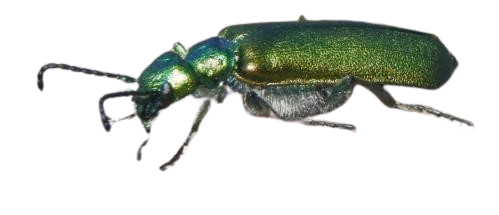
The term “Spanish Fly,” known in Morocco as “debbônat l-hend” or the “Indian fly,” is misleading, as it implies a fly. In reality, it’s a beetle containing a substance known as cantharidin4. Cantharidin has a historical reputation as an aphrodisiac, but it’s important to note its toxicity. While the powder derived from this beetle does exhibit aphrodisiac effects, its high toxicity is cause for concern.
In addition to its inclusion in Ras el hanout, there’s another concerning historical use of “debbonat l-hend.” Before its prohibition, some Moroccans incorporated it into a hallucinogenic mixture with sweet almonds. This blend was believed to induce psychological liberation, empowering users to confront embarrassing situations with newfound courage.
Traditional Uses and Modern Concerns
Dr. Jamal Bellakhdar, a pharmacist and expert in traditional medicine, documented the properties of cantharidin in his book ‘Contribution to the Study of Traditional Pharmacopoeia in Morocco‘ (p. 810). Here’s a closer look at “debbonat l-hend’s” traditional uses:
- Import and Description: The insect (Lytta vesicatoria) has a dark green color with metallic reflections and was imported from Spain.
- Traditional Medicine: Debbonat l-hend was an ancient drug used in Arabic medicine. It was also included as an ingredient in Ras el Hanout.
- Treatments (Oral): Traditionally, it was administered orally throughout Morocco (maximum 1 cantharidin infused in hot tea) to treat various ailments including gonorrhea, rabies, female infertility, male impotence, kidney stones, oliguria, and even venomous bites. Women also used it as an abortifacient.
- Treatments (Topical): The powdered insect, mixed with oil or butter, was used topically to treat skin and scalp conditions like vitiligo, ringworm, baldness, and alopecia. It was also used for venomous bites.
- Decline and Prohibition: Due to its dangers, the use of debbonat l-hend has significantly decreased in recent years. It has also been prohibited in Morocco since the 1990s.
Ras el Hanout: An Alchemical Blend
Ras el Hanout, meaning “head of the shop,” is more than just a Moroccan spice blend; it’s an alchemical creation. Gathering all the ingredients is but the first step. The true magic lies in the proportions, a closely guarded secret held by the spice masters, the “Attarines,” of Fez and Marrakech’s ancient medinas.
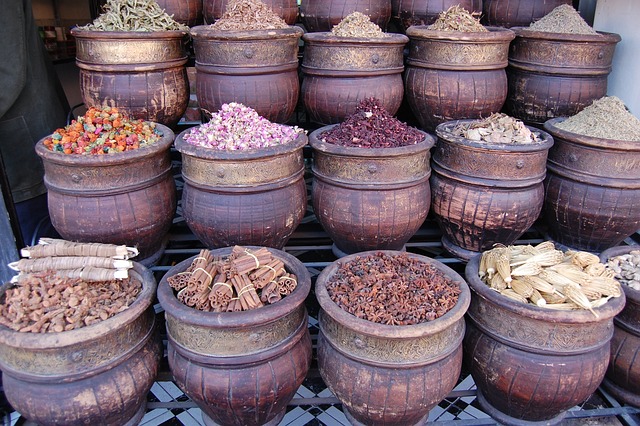
Within these labyrinthine medinas, vibrant “Souk el Attarines” (spice markets) brim with colorful displays. Here, the Attarines, like alchemists of old, meticulously blend their secret formulas. While you can attempt to recreate Ras el Hanout at home, the true mastery lies in the precise ratios – the very essence of the blend’s soul.
Each “Attarin” possesses their own unique recipe, a carefully guarded alchemical formula passed down through generations. These proportions are not merely measurements, but an art form, honed through experience and customer feedback. Just as an alchemist seeks the perfect elixir, the Attarine strives for the ideal balance of flavors – a symphony of spices that awakens the senses and elevates any dish.
So, while you might possess the ingredients, the true power of Ras el Hanout remains elusive. It’s a testament to the artistry of the Attarines, their ability to transform ordinary spices into an alchemical masterpiece.
Notes:
- Sijilmasa, the bustling global city visited by Ibn Battuta in 1351, served as a crucial hub connecting Africa to the south and the Mediterranean world to the north, facilitating trade and cultural exchange.^1 The “Wind Gate,” located in Sijilmasa, was renowned as the gateway to Fez, symbolizing its significance as a center for commerce and cultural interaction. Caravans traversed through this gate, linking Sijilmasa and Fez in a network of trade and travel. ↩︎
- William Lempriere (1763–1834) was a British author, magistrate, and colonial administrator. He served as the first Chief Magistrate of the Seychelles and later became the Colonial Treasurer of Mauritius. Lempriere is best known for his book “A Tour from Gibraltar to Tangier, Sallee, Mogodor, and Tarudant,” which provides valuable insights into North African societies and cultures during the late 18th century. ↩︎
- Khalil N. Medicinal and Edible Plants of Morocco. (2023). Self-published. pp. 148-149. ↩︎
- Cantharidin is a toxic substance derived from certain beetles, notably the Spanish fly. It has historically been used in traditional medicine as an aphrodisiac and for various therapeutic purposes. However, due to its high toxicity and associated health risks, its use has been banned in many countries, including Morocco, since the 1990s. ↩︎