

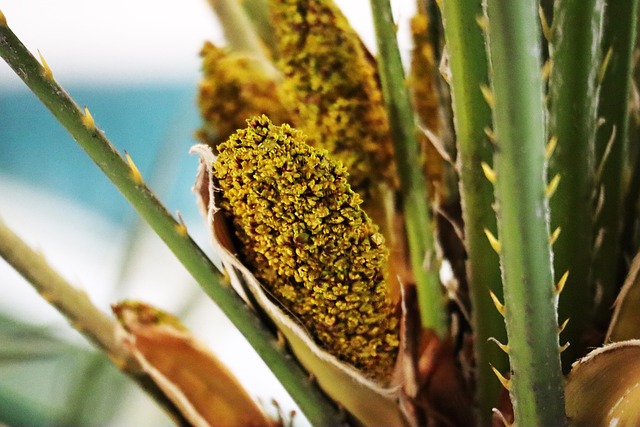
Saw Palmetto, 锯棕榈, Palmito Enano, Palmier Nain, Zwergpalmetto, Palmetto Nano, Пальма сереноа, ノコギリヤシ, Palmeira-Anã, الدوم.
Saw Palmetto, scientifically known as Serenoa repens, is a small palm tree native to the southeastern United States. While it may not be as well-known as some other herbal remedies, Saw Palmetto has gained popularity in recent years for its potential health benefits, particularly in relation to prostate health and hair growth.
Saw Palmetto has a long history of use among Native American tribes who believed in its medicinal properties. Traditionally, it was used to alleviate urinary and reproductive issues. Over time, its reputation spread, and it became a popular herbal remedy during the early 20th century. Today, it continues to be widely used and studied for its potential health benefits.
Saw Palmetto vs European Fan Palm
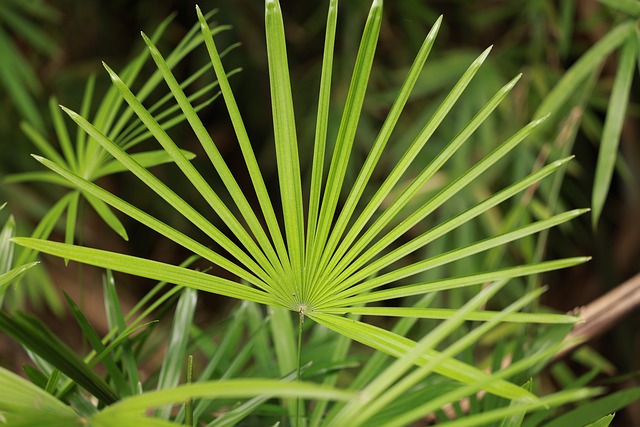
Chamaerops humilis, the European Fan Palm, is an excellent choice for landscaping due to its slow growth, tropical appearance, and resilience to cold and drought. With distinctive multiple trunks and triangular fan-shaped leaves, it can be a striking focal point or form an effective barrier when planted in groups. Adaptable to urban conditions, it thrives in full sun, tolerates partial shade, and withstands freezing temperatures. Notably, this palm species is also found in North Africa, extending its presence beyond Europe.
Saw Palmetto Berries vs. Chamaerops humilis Berries
Saw palmetto, identified as Serenoa repens or Sabal serrulata, played a vital role in the Native American diet and medicine in the southeastern U.S. Historically, it was recognized for its efficacy in treating urinary tract issues, promoting sperm production, and increasing libido in men. Today, its predominant use lies in addressing benign prostatic hyperplasia (BPH), a non-cancerous enlargement of the prostate.
Chamaerops humilis L., a dwarf palm native to the European Mediterranean coast and North Africa, serves diverse purposes in Spain, Morocco, Italy, and Egypt. Cultivated for its ornamental appeal, the plant is integral to traditional practices and culinary traditions. In southern Spain, the husk “higa” is consumed, Moroccans eat the fruits, and in Italy, young suckers are consumed. Medicinally, it is used to treat digestive disorders in Morocco, and the basal growth, known as “Jemar,” is consumed, similar to “heart of palm.” The plant’s multifaceted utility underscores its cultural and practical significance in these regions.
| Note: When purchasing dietary supplements, it is crucial to differentiate between the European Dwarf Palm (Chamaerops humilis) and American palms like saw palmetto. European Dwarf Palm has diverse traditional uses, while saw palmetto is associated with specific health benefits, particularly in prostate health. Check product labels for informed choices. |
Chemical Composition of Saw Palmetto
Saw Palmetto berries contain a rich array of essential chemicals and compounds, each contributing to its potential health benefits. These components include:
- Fatty Acids: Saw Palmetto berries contain fatty acids such as lauric and oleic acids, which play essential roles in various physiological processes.
- Phytosterols: Rich in phytosterols like β-sitosterol and campesterol, Saw Palmetto berries exhibit properties that may support prostate health and alleviate urological symptoms.
- Flavonoids: Flavonoids present in Saw Palmetto berries contribute to their antioxidant properties, potentially offering protection against oxidative stress and inflammation.
- Triterpenes: Saw Palmetto berries also contain triterpenes, which have been associated with anti-inflammatory effects and may contribute to the herb’s therapeutic properties.
- Polysaccharides: These complex carbohydrates found in Saw Palmetto berries may play a role in supporting overall health and immune function.
- Vitamins: Saw Palmetto berries contain essential vitamins such as β-carotene, γ-tocopherol, and δ-tocopherols, which are known for their antioxidant properties and potential benefits for prostate health.
Saw Palmetto: Health Benefits and Uses
Promotes Prostate Health: Benign prostatic hyperplasia (BPH) and lower urinary tract symptoms (LUTS) commonly affect aging men, with prevalent use of 5α-reductase inhibitors and α1-adrenoceptor antagonists as standard treatments. Saw palmetto extract (SPE), rich in fatty acids, phytosterols, and flavonoids, has been associated with various pharmacological effects, including 5α-reductase inhibition, anti-androgenic, anti-proliferative, anti-inflammatory, and anti-edema properties. Recent studies suggest potential α1-adrenoceptor inhibitory effects in the lower urinary tract, offering symptom relief for BPH and LUTS. Despite historical use and widespread popularity, the efficacy of SPE in BPH patients remains a subject of ongoing research and evaluation.
Research on Saw Palmetto and Prostate Health
- A meta-analysis on saw palmetto berry extract (SPE) showed promising results in alleviating urinary symptoms in patients with benign prostatic hyperplasia (BPH). SPE exhibited various pharmacological effects, including inhibition of 5α-reductase, antiandrogenic effects, and anti-inflammatory properties, suggesting its potential as an alternative treatment for BPH-related urinary disorders.
- A clinical trial compared the efficacy of treatment with saw palmetto, selenium, and lycopene to another medication. Results showed that the saw palmetto combination therapy was non-inferior to the other medication in improving International Prostate Symptom Score and maximum urinary flow rate, suggesting its potential as an alternative treatment option for BPH.
Promotes Hair Growth: Saw palmetto is believed to aid in hair regrowth by inhibiting 5α-reductase, which decreases the conversion of testosterone to dihydrotestosterone (DHT), a hormone associated with hair loss. This reduction in DHT levels may protect hair follicles and promote growth. Studies, such as those found in the ‘Journal of Cutaneous and Aesthetic Surgery,’ indicate that saw palmetto’s anti-androgenic properties may help safeguard hair follicles from DHT-induced damage
Balances Hormones: Saw Palmetto’s impact on 5-alpha-reductase and testosterone metabolism may balance hormone levels. Scientific studies, such as one in the “Journal of Cosmetic Dermatology,” show its anti-androgenic properties reducing acne lesions. Another study in the “Journal of Investigative Dermatology” links androgens to hirsutism, suggesting Saw Palmetto’s potential in moderating excess hair growth.
Improves Urinary Function: Traditionally, Saw Palmetto has effectively eased urinary symptoms related to an enlarged prostate, including increased urination and weakened urine flow. Emerging research supports this tradition, indicating that Saw Palmetto may enhance urinary function by inducing relaxation in the smooth muscles of the bladder and urinary tract.
Pumpkin Seed & Saw Palmetto Oil: A combination therapy of pumpkin seed oil and saw palmetto oil, as demonstrated in a Korean study, effectively improved symptoms of benign prostatic hyperplasia (BPH) over 12 months, with no reported side effects. Saw palmetto oil administered at 160 mg twice daily for 3 months yielded a remarkable 22% improvement in the International Prostate Symptom Score (IPSS), aligning closely with the study’s findings. Moreover, significant enhancement in urinary flow rate (MFR) was observed after 6 months, highlighting the promising potential of this combination therapy in BPH management.
Saw Palmetto: Supporting Women’s Health
In a study published in 2022 in the International Journal of Medical Research and Health Sciences, the effects of Saw-Palmetto (Serenoa repens) on Letrazole-induced Polycystic Ovarian Syndrome (PCOS) in female albino Wistar rats were examined. The findings revealed that treatment with Saw-Palmetto significantly alleviated PCOS symptoms, suggesting its potential as a therapeutic option for the condition. Complementing saw palmetto with a PCOS-friendly diet and exercise regimen may enhance its effectiveness. Additionally, saw palmetto may aid in preventing hair loss and promoting increased hair density in women. However, further research is necessary to validate these potential benefits fully.
Saw Palmetto Side Effects
- For allergic reactions, seek emergency assistance immediately.
- Although generally safe, discontinue use if severe issues arise.
- Common side effects may include nausea, vomiting, diarrhea, constipation, headache, dizziness, and sexual problems.
Warnings and Precautions
- Follow product label directions.
- Consult healthcare providers before use.
- Avoid it if you have bleeding disorders, liver disease, or pancreas disorders.
- Not safe during pregnancy; may reduce birth control pill effectiveness.
- Potential harm to breastfeeding babies.
- Do not give to children without medical advice.